
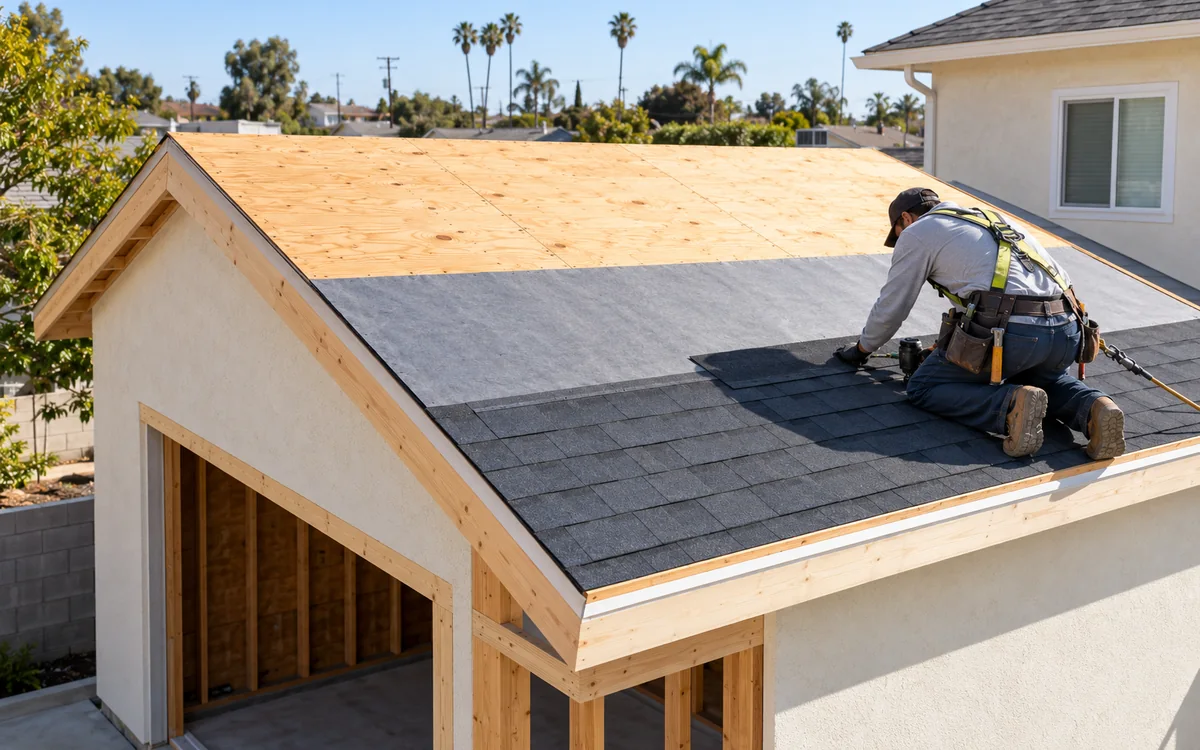
New construction is a different roofing job
A new roof installation starts with a new structure or newly built roof section. A replacement removes or changes an existing assembly. That distinction affects the estimate, the sequence of work, and coordination with a builder or other trades.
Tell us whether the project is a new home, a room addition, a garage, or another structure. Share the planned roof shape and material if those choices are already made. If the project changes during design, the roofing scope should be reviewed with the revised plans before materials are ordered.
Decide how the roof will shed water
Roof shape, slope, and drainage should be considered together. A low-slope addition may need a different roof system from the main house. Valleys, wall connections, penetrations, and edges need details suited to the assembly rather than a material chosen only for its appearance.
Ask how water will leave each roof section and where it will go. New work can change runoff near a doorway, walkway, neighboring wall, or existing gutter. Those relationships belong in the project discussion before the covering is installed.
- Match roof covering and underlayment to the planned slope.
- Coordinate roof-to-wall connections and any existing roof ties.
- Plan drainage, ventilation, roof access, and penetrations together.
Coordinate the trades before closing the roof
Framing, decking, roofing, electrical work, plumbing vents, and rooftop equipment may involve different people. Clarify who is responsible for each opening and which work must happen before the roof covering is finished. Later changes can affect completed roofing and its details.
Discuss delivery access, storage space, required inspections, and who can approve a change to the roofing scope. Keep the agreed drawings and material decisions together.
What belongs in a new-installation estimate?
Ask for the roof areas, specified assembly, edge and flashing details, and any exclusions to be described. The quote should distinguish roofing work from structural framing, gutter work, solar installation, or other services that may be handled separately. Include how plan revisions or added penetrations would affect the price.
Confirm the approval and inspection responsibilities with the project team and the agency that serves the property. The jurisdiction and building scope matter. Before work begins, discuss scheduling, protection of unfinished areas, cleanup, and the documents provided at completion.
Bring us the project you are planning
Elevate Roofing Co. takes new-installation inquiries in Wilmington and nearby Harbor City, San Pedro, Carson, and Lomita. You do not need to have every material choice settled before calling. Tell us what is being built and which decisions remain open. Call (747) 325-5484 or send your project details through the estimate form.
Your questions, answered.
Is new roof installation the same as roof replacement?
No. New installation generally covers a newly built roof or structure. Replacement addresses an existing roof assembly and may involve removal and repair of existing components. Tell us which project you have so the estimate covers the right work.
Can my addition use a different roofing material from the house?
It may need to, depending on slope, drainage, design, and the approved plans. The connection between old and new work also matters. Discuss the complete assembly with the project team before choosing a covering for appearance alone.
When should I contact a roofer during construction planning?
Contact us while roof shape, materials, access, and trade coordination can still be discussed. Share the current plans and construction stage. Scheduling and pricing depend on the actual scope and readiness of the structure.